.png)
.png)
Bureau d'Analyse et de Recherche Amateur
Publier avec nous
contact@bara-think-tank.com

En inscrivant mes coordonnées ci-dessous, j'accepte de recevoir les dernières actualités de BARA.
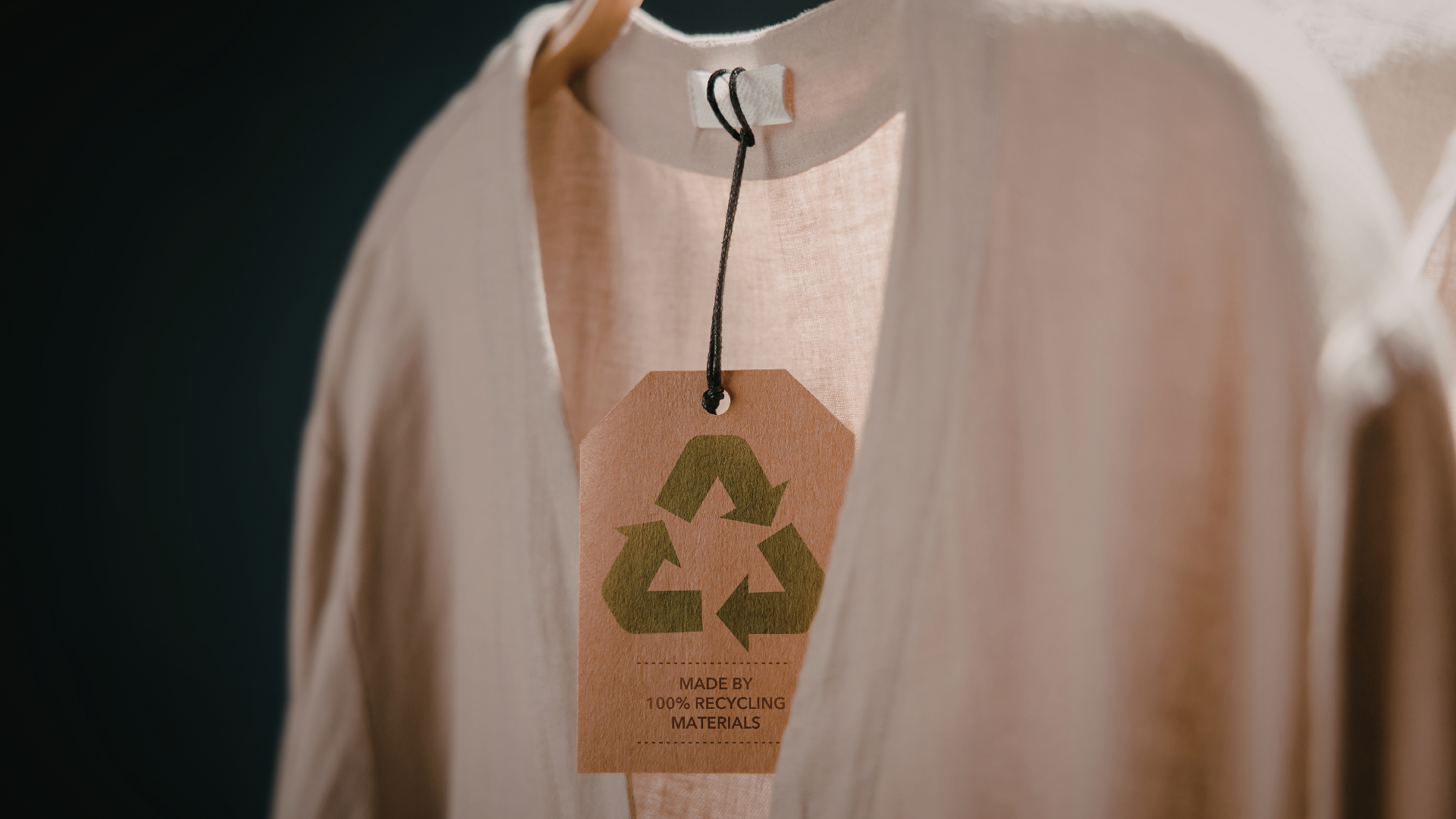
Once celebrated as a symbol of individuality and progress, fashion has become one of the most polluting industries on earth, driven by an economy of acceleration and disposability. With the environmental damage lies another question: how can fashion reclaim its cultural and aesthetic legitimacy in a world that can no longer afford excess?
Temps de lecture :

Fashion stands at a crossroads between creativity and collapse. Once celebrated as a symbol of individuality and progress, it has become one of the most polluting industries on earth, driven by an economy of acceleration and disposability. With the environmental damage lies another question: how can fashion reclaim its cultural and aesthetic legitimacy in a world that can no longer afford excess? Nowhere are these tensions more tangible than in fast fashion — a phenomenon that turned creativity into speed and desire into waste. Its rapid expansion accompanied by the contradictions it reveals make it a relevant prism through which to understand fashion’s broader stalemate.
The fast fashion business model is intrinsically antithetical to sustainability. It is designed to rely on speed, volume and disposability. Defined as low-cost clothing collections that quickly and cheaply mimic luxury trends, fast fashion helps satisfy the deep desire (especially) among young consumers for status and novelty. However, it is able to do so at the cost of the planet and society.
Giants such as Zara or H&M have shown how collections can move from catwalk to store in just a few weeks and by doing so established a rupture with the traditional six-months cycle. This accelerated turnover is the result of disposability: garments are designed for obsolescence. On average, they will be worn between 7 and 10 times only before being discarded since they are often marketed with an expected lifespan of only “ten washes”. More than half of fast fashion items are discarded in less than a year.
As a consequence, it allows companies to fuel higher profit margins — around 16% compared to just 7% for traditional retailers — by high-volume sales at low cost. To allow such an outcome, production operates in fast cycles: rapid prototyping, small batches with large variety, and efficient logistics.
This disposability fosters what is referred as “massclusivity” by scholars: a constant churn of newness that offers the illusion of exclusivity to the masses (while simultaneously undermining the durability that once defined fashion). The appeal lies in immediate gratification and the freedom to continually reinvent identity, a postmodern phenomenon. The newest generation of ultra-fast players, such as Shein and Temu, have raised the stakes even further, offering average prices of $14 per item and turnaround times as short as 10 days. This system primes consumers to return every three weeks in search of new styles. In other words, fast fashion brands are able to make profit relying on speed and waste, which is the exact opposite of durability; fast fashion is a system built not on longevity, but on engineered transience.
Beneath the appearance of affordable trends lies an immense web of hidden costs that are not reflected in the price tag. The textiles system operates in an almost entirely linear way – which can be summed up that way: take, make, dispose — and by doing so generates enormous negative externalities.
Here stands some data accounting for the environmental cost of fashion (A New Textiles Economy; Fashion on Climate):
Fast fashion also has an important economic cost, mostly tied to underutilized clothing (A New Textiles Economy; Fashion on Climate):
Climate vulnerability compounds these risks. Indeed, by 2030, extreme weather could jeopardize USD 65 billion in apparel exports as well as nearly one million jobs in key manufacturing economies.
Nevertheless, it remains important to acknowledge that the negative externalities are not limited to the environmental ones. The constant pressure exerted by fast fashion on its suppliers creates poor working conditions, long hours as well as low pay. Workers are often facing dangerous environments and are exposed to hazardous substances or to conditions close to modern slavery — as have shown concerns raised about child labour. In this logic remains the 2013 Rana Plaza disaster in Bangladesh, bringing about the death of more than 1000 garment workers, a major and tragic symbol of this industry’s systemic failures. Supply chain volatility, also referred to as the “bullwhip effect”, deepens these vulnerabilities, by provoking wage theft, union busting or even factory shutdowns (notably in countries like Bangladesh, Cambodia and Pakistan). The ones that often shoulder most of the environmental consequences of these activities are the local communities: untreated wastewater pollutes rivers that are used for fishing, water consumption and bathing. With more scattered and opaque supply chains than ones of the agribusiness, transparency is still elusive, which also makes accountability almost impossible. In essence, the very factors that make fast fashion attractive (e.g., cheap prices, accessibility, relentless novelty) are also the ones that make it structurally unsustainable, ecologically and socially.
Given the glaring problems, a wave of “sustainable” initiatives has emerged. But how many are truly transformative, and how many are simply weaving a more sophisticated illusion?
The first layer of the illusion is personal. The fast fashion consumers experience an inherent dissonance, resulting in a consumer paradox. Indeed, as they often share a concern for environmental issues, they still indulge in consumption patterns antithetical to ecological best practices. Today’s young consumers — who are statistically more aware of green values — struggle to balance their continual need for newer fashion with their presumed commitment to environmental sustainability. As a consequence, studies identify an irrational consumer behavior pattern, with choices poorly connected to, or completely disconnected from consumer values. The reason for that conclusion is that sustainability is often simply not an attribute that most consumers consider when purchasing clothing. The bulk of data thus suggests that young people separate fashion from sustainability. Even after high-profile incidents, such as Nike running sweatshop operations, participants in studies did not boycott the company’s products.
This is not simply hypocrisy; it is actually a paradox engineered by the system itself. Fast fashion expertly taps into powerful psychological drivers: the dopamine hit of a new purchase, the social currency of trending styles. When a Shein haul offers immediate gratification for less than the price of a movie ticket, the “ethical choice” becomes a luxury of privilege or immense willpower. This “consumer paradox” seems to go hand in hand with the dominance of speed, style and identity. In a society where individuals are encouraged to continually consume, as individual identity continually evolves, a materially referential re-imagining of the self seems required. Thus this desire for “multiple selves in evolution” is central to fast fashion lovers. Fast fashion thrives by exploiting the consumers’ significant disposable income (or available credit) thanks to an offer of of-the-moment design and the immediate gratification of continually evolving temporary identities. This is what is referred as “McFashion” in contemporary literature, using the popularity of the fast-paced food system of McDonalds to describe the speed with which gratification is provided to individuals by fast fashion. If it is able to thrive thanks to fast cycles and low cost, above all it is the quick response times that allow greater efficiency in meeting consumer demand. Consumers are primed to browse fast fashion stores every three weeks or so in search of new styles. Updated looks, greater variety, and limited editions, along with speed of availability make the industry very attractive to consumers, which initially consists of a younger crowd but is now attracting older segments as well. Paradoxically, what makes fast fashion common is also what makes it scarce: the supply side of fast fashion ensures scarcity, which in turn drives demand.
The unsustainability of fast fashion also lies in the systemic illusion that clothes by nature last long while clothes are designed for disposability. Indeed, the industry exists courtesy of impulsive behavior, employing practices of planned obsolescence. This can include design for transient fashion as well as limited functional life design or even designing aesthetics that reduce satisfaction. Fast fashion companies openly proffer the “ten washes” as a benchmark, after which an item is not expected to retain its original value due to poor quality materials and manufacturing. Companies pay no price for this revelation and most customers experience no regret in discarding clothes based on this principle. In this logic, this fosters an extremely low wear count, some garments being estimated to be discarded after just seven to ten wears. Beyond it, a phenomenon of massive underutilization can be observed: clothing utilization has decreased by 36% globally compared to 15 years ago. In the US, clothes are only worn for around a quarter of the global average, and in China, clothing utilization decreased by 70% over 15 years. This is not without consequence when it comes to considering economic results: more than half of fast fashion produced is disposed of in under a year. Globally, customers miss out on USD 460 billion of value each year by throwing away clothes they could continue to wear (A New Textiles Economy).
The system is designed to make the sustainable option the harder, most expensive, and less immediately rewarding one. This values-behavior gap is not a consumer failure; it is a systemic feature that fast fashion relies upon.
The second layer is corporate. If it is possible to identify a discrepancy between customers values and behaviors, such contradictions can also be observed in the fashion industry’s communication which in many respects exploits green values adhesion to create profit, resulting in an inadequacy of current efforts (the “illusion of progress”). The industry has become adept at “greenwashing”— co-opting the language of sustainability without changing its core practices. This creates a dangerous mirage of progress.
Brands launch “conscious” lines containing a fraction of recycled materials while continuing to produce billions of new garments under the same unsustainable model. This strategy aims to conserve customers that are concerned about their consumption choices impacts and, to pursue the analogy, has been compared to the “light” menu item at a fast-food chain whose business depends on selling sugary drinks and fries.
Likewise, empty recycling programs are common. Take-back programs are heavily marketed, yet they often recover less than 1% of a brand’s output. The technology to effectively recycle blended fabrics at scale barely exists, meaning many donated clothes end up in landfills in the Global South, causing local environmental crises.
Lastly, the “net zero” smokescreen is used by brands, that make grand “net zero by 2050” pledges while their production volumes continue to soar. If “ethical fashion” is defined by meeting climate targets, the current pace of decarbonization efforts is indeed an illusion of progress. According to estimates by the Global Fashion Agenda, the fashion industry currently emits approximately 2.1 billion tonnes of CO₂ equivalent per year (as of 2018). In the absence of additional action, emissions could rise to around 2.7 billion tonnes annually by 2030. Even if existing initiatives are fully implemented, they would only stabilize emissions at roughly 2.1 billion tonnes, nearly twice the level required to align with the 1.5 °C pathway. The immense scale of the problem and the slow pace of transformation compared to what is needed supports the argument of an illusion.
The inherent conflict between consumption-driven business models (especially fast fashion) and sustainability goals remains potent. “Third generation” fast-fashion companies (like Shein) have disrupted the market with ultra-low prices and rapid turnover, and while some promote a “zero-waste” narrative, their models remain intrinsically linked to rapid trend cycles and quickly discarded products.
Thus, markets — as “architects of desire” — face a tension: they are encouraged to update their playbooks to eradicate messages of overconsumption and redirect aspiration toward circular solutions (resale, rental) but their traditional key performance indicators (KPIs) are focused on increasing sales volume. Supply chain volatility (“bullwhip effect”) has led to factory instability, causing suppliers to delay critical investments in sustainable infrastructure and greener practices. This is particularly problematic as over 70% of fashion’s Greenhouse Gas (GHG) emissions originate upstream.
Most current industry efforts focus on reducing the impact of the current linear system (e.g., using efficient production techniques) rather than taking an upstream, systemic approach to tackling the root cause (low clothing utilization and recycling).
If the current path is an illusion, what would it truly take to build an ethical fashion system? The solutions are less about minor tweaks and more about a fundamental rewrite of the rules.
The era of the fashion industry self-regulating sustainability is drawing to a close. Indeed new rules worldwide are set to mandate action on aspects like textiles production, chemical use, recycling, and waste management. The negative impacts of the industry are becoming more transparent as time goes by and are better understood by digitally-enabled customers, leading to regulatory trends that could affect the profits of businesses that fail to respond.
In this logic, the European Union (EU) is leading the way with its Strategy for Sustainable and Circular Textiles. It consists of a strategy that is aiming for a climate-neutral, circular economy. Here are a few key components:
These EU rules are expected to have a global impact, particularly on Asian manufacturers, and other regions like the US (e.g. New York Fashion Act) and the UK also have evolving initiatives.
Such policies level the playing field, ensuring that companies competing on sustainability are not undercut by those competing on exploitation.
Policy as the ability to provide targets and strategies for critical areas like substances of concern, microfibres, durability, or recyclability. Clear, binding policies provide the visibility that is needed to coordinate infrastructure development and investment planning. Policymakers can stimulate demand by incentivizing the use of recycled materials and/or disincentivizing the use of virgin materials. Governments can use public procurement to acquire textiles through new service models and specify targets for recycled content in clothing used by the public sector thereby stimulating wider market adoption. The implementation of these regulations require brands to revamp their business models, focusing on full supply-chain traceability, decarbonizing production, and designing for longevity and circularity.
The linear model should be overcome, leading to a circular economy in which waste is designed out. This implies generalized and profitable business models favorizing use rather than ownership.
Economic and ethical incentives to push decision-makers to hasten their responses have never been stronger. More than USD 500 billion of value are lost every year globally because of clothing underutilization and lack of recycling. Roughly 55% of this fastened required abatement will create net savings for the entire industry. 90% of the fastened required abatement to reach the 1.5 degrees trajectory can be realized at a moderate cost — less than USD 50 per ton of greenhouse gases emissions (Fashion on Climate). For instance, here are some concrete examples of cost abatement levers:
Increasing the average number a garment is worn is considered as the most direct lever to capture value and decrease waste. ⅕ garment has to be traded via circular economic models (such as rental, resale/re-commerce, repair and refurbishment) to reach the 1.5°C climatic goal by 2030. At a global scale, consumers annually miss out on USD 460 billion of value by throwing away clothes that they could continue wearing. In this logic are rental models an interesting opportunity for customers that are willing to frequently change their outfits (e.g., subscription-based models) or for one-off occasions garments. Optimized resale models are particularly interesting when it comes to undesired but still durable garments. If companies like The RealReal or Rent the Runway have been pioneers in this field, they still have to become the norm, not the niche. Brands like Patagonia, with its well-known Worn Wear program, illustrate how repairing services can make customers loyal and waste reduced. However (it will be discussed later), for that change to be implemented requires a critical cultural change in favor of maintenance over replacement. Finally, the ideal innovation lies in textile-to-textile recycling. Still, massive investment is needed in technologies able to efficiently segregate and recycle mixed tissues and by doing so recover the USD 100 billion materials currently lost each year.
To achieve the climatic goals by 2030, the industry will have to radically reinvent its business models by separating the value creation and the value growth. This mainly means that progress must be accomplished towards reduced wardrobes with more value and durability, supported by thriving re-commerce and rental markets. Most of the potential GHG savings (60%) must be from upstream activities (materials production, preparation and transformation). The exclusive use of renewable energy in processing and garment manufacturing is an upstream key measure. Brands and retailers are crucial in supporting this energetic transition (e.g., through power purchase agreements).
Recycling needs a radical transformation, since less than 1% of materials used to produce clothing is recycled to produce new clothing. Better recycling could help capture the USD 100 billion dollar worth of materials lost each year. This transition needs a new degree of harmonization and cooperation along the supply chain, as systems can not be modified through simple gradual improvements alone. The major shortcoming is not brought about by the lack of activity but by the necessity to coordinate, harmonize and deepen the already existing initiatives.
The question of whether ethical fashion is an illusion is, at its core, a matter of market structure and value perception. The dominant fast fashion model has created the powerful illusion that low initial cost and endless novelty represent a rational choice for the consumer, while obscuring significant externalized costs to the environment and labor. To see ethical fashion not as an illusion, but as a viable market sector, requires a fundamental recalibration of how we define value in the apparel industry.
The illusion begins to fade when we recognize that durability, reparability, and timeless design are not just ethical choices, but sound economic principles. They represent a shift from a linear “take-make-waste” economy, which is inherently resource-inefficient, to a circular model that maximizes the utility and lifespan of each asset. The act of repair is not a sentimental gesture: it is rather a micro-transaction that challenges planned obsolescence and creates new revenue streams in a product's life cycle.
For companies, the transition is from sales volume to sales value. Indeed, fashion's future profitability lies in building brands that are not simply product providers, but stewards of value, which means designing for longevity, offering repair services, and building brand loyalty through a shared commitment to quality and responsibility. The role of the consumer is also changing, from passive end-user to active "custodian," which creates a deeper and more resilient brand relationship, reducing attrition while driving advocacy.
Therefore, ethical fashion is an illusion only if we remain ensnared in the old paradigm. The emerging model presents a lucid business rationale: if investment in quality is made, as well as in transparency and circular services, companies can build more sustainable—and ultimately more durable—businesses. The true illusion was believing the old model of disposable consumption could last forever.
The new reality is that the most creative and responsible path forward is also the most economically resilient one.
Fashion and Environment
Ellen MacArthur Foundation. (2017). A New Textiles Economy: Redesigning Fashion’s Future. https://www.ellenmacarthurfoundation.org/a-new-textiles-economy
Common Objective. (2021, November 23). The Issues: Water. https://www.commonobjective.co/article/the-issues-water
David Suzuki Foundation. (n.d.). The Environmental Cost of Fast Fashion. https://davidsuzuki.org/living-green/the-environmental-cost-of-fast-fashion
Earth.Org. (2022). The 10 Essential Fast Fashion Statistics. https://earth.org/fast-fashion-statistics
BCOME. (n.d.). The Environmental Footprint of Fashion: Key Impacts to Measure. https://bcome.biz/blog/the-environmental-footprint-of-fashion-key-impacts-to-measure
Social and Labor Impacts
Das, S., Karmakar, S., Olubiyi, T., & Behera, S. (2025). The Social and Environmental Impact of Fast Fashion. In Global Impacts and Sustainable Practices in Fast Fashion (pp. 311–330). IGI Global. https://doi.org/10.4018/979-8-3693-7853-3.ch012
Circular Economy and Business Transformation
UNEP (United Nations Environment Programme). (2023). Sustainability and Circularity in the Textile Value Chain: A Global Roadmap. https://circulareconomy.europa.eu/platform/sites/default/files/2023-12/Full%20Report%20-%20UNEP%20Sustainability%20and%20Circularity%20in%20the%20Textile%20Value%20Chain%20A%20Global%20Roadmap_0.pdf
McKinsey & Company & Global Fashion Agenda. (2020). Fashion on Climate: How the Fashion Industry Can Urgently Act to Reduce Its Greenhouse Gas Emissions. https://www.mckinsey.com/industries/retail/our-insights/fashion-on-climate
The Business of Fashion & McKinsey & Co. (2024). The State of Fashion 2025. https://www.mckinsey.com/industries/retail/our-insights/state-of-fashion#/
The Business of Fashion & McKinsey & Co. (2023). The State of Fashion 2024. https://www.mckinsey.com/industries/retail/our-insights/state-of-fashion-2024
Sadowski, M., Perkins, L., & McGarvey, E. (2021). Roadmap to Net-Zero: Delivering Science-Based Targets for the Apparel Sector. Apparel Impact Institute. https://apparelimpact.org/wp-content/uploads/2021/11/21_WorkingPaper_RoadmapNetZero_.pdf
International Finance Corporation (IFC). (2023). Strengthening Sustainability in the Textile Industry. IFC Insights Report. https://www.ifc.org/en/insights-reports/2023/strengthening-sustainability-in-the-textile-industry
Global Fashion Agenda. (2019). The Pulse of the Fashion Industry. https://globalfashionagenda.org/resource/pulse-of-the-fashion-industry-2019/
Consumer Behavior and Ethical Fashion
Joy, A., Sherry, J. F., Venkatesh, A., Wang, J., & Chan, R. (2012). Fast Fashion, Sustainability, and the Ethical Appeal of Luxury Brands. Journal of Consumer Research, 38(3), 493–505. doi.org/10.2752/175174112X13340749707123
Lee, S. E., & Lee, K. H. (2024). Environmentally Sustainable Fashion and Conspicuous Behavior. Humanities and Social Sciences Communications, 11(498). https://doi.org/10.1057/s41599-024-02955-0
Regulation and Policy
European Parliament. (2020). Fast Fashion: EU Laws for Sustainable Textile Consumption. https://www.europarl.europa.eu/topics/en/article/20201208STO93327/fast-fashion-eu-laws-for-sustainable-textile-consumption
Design Philosophy and Fashion Culture
Koren, Leonard. Wabi-Sabi for Artists, Designers, Poets & Philosophers. (1994). Internet Archive. https://archive.org/details/wabisabiforartis0000kore/mode/1up
Tungate, Mark. Fashion Brands: Branding Style from Armani to Zara. (2008). Internet Archive. https://archive.org/details/fashionbrands0002unse/mode/1up
Supplementary Data
Textile Exchange (2025). Materials Market Report 2025. https://textileexchange.org/knowledge-center/reports/materials-market-report-2025/
BARA permet à tous les étudiants qui le souhaitent de publier de manière simple. Il vous suffit de vous inscrire sur la page "publier avec nous" puis de nous envoyer votre travail à l'adresse contact@bara-think-tank.com en s'assurant de bien respecter chaque critère pour les différents formats.
Non ! Que cela concerne les baratins, les baragouins ou les analyses, les propos qui y sont tenus n'engagent que leurs auteurs. BARA ne souhaite en aucun cas corroborer ou infirmer ces propos, et ce, même s'ils peuvent faire l'examen d'une vérification avant leur publication.
Oui ! Pour cela, il vous suffit de nous contacter à l'adresse suivante contact@bara-think-tank.com . Vous devrez préciser en objet de votre mail "Retrait" suivi du format de votre écrit (Baratin, Baragouin ou Analyses). Votre mail devra par la suite contenir la référence exacte de la publication.
Non ! Outre la responsabilité de vos propos, publier avec nous ne fait pas de vous un membre de BARA. Vous n'avez pas non plus à publier de manière régulière. BARA offre l'opportunité d'être complètement maître de son activité, chaque étudiant peut choisir son format de publication et son rythme de publication.


